Records & Releases
The source shelf
A practical directory of artist pages, archives, structured music records, specialist discographies and reviews.
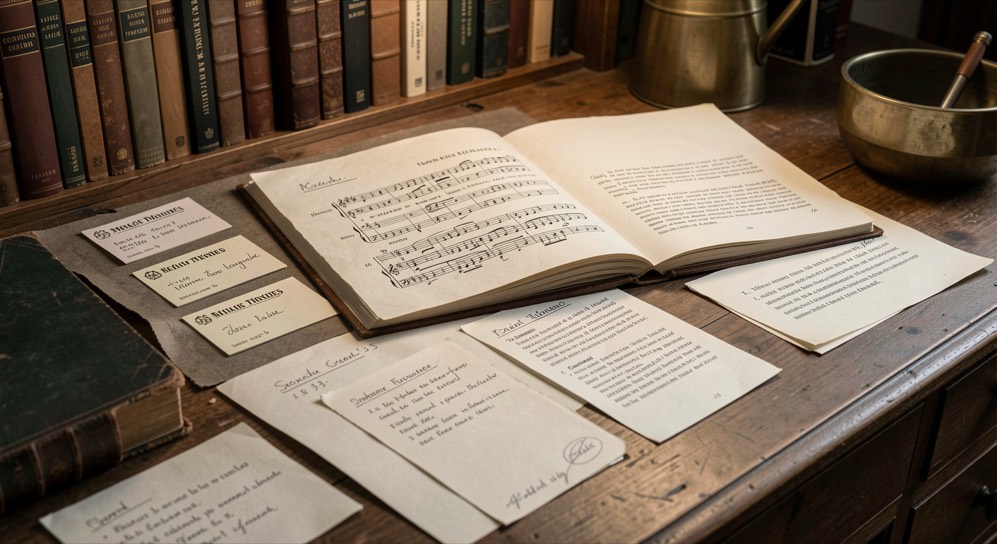
No single database settles every small-label record. Artist pages can be strongest for credits; institutional pages can clarify a musician’s role; structured identifiers help with relationships; specialist discographies can preserve session context; reviews add attributed interpretation.
The shelf below explains what each source type is good for and what it cannot prove. Links are kept as research trails, not as a decorative list of authority logos.
A source shelf earns its place only when the working file behind it stays in order; the guide to research resources keeps that file from first note to cited version.
Artist-controlled pages
Best for release identity, credit wording and current context.
Institutional biographies
Useful for a musician’s role or leader debut when the institution states it.
MusicBrainz
Stable identifiers and relationships, with community data treated as a lead.
Specialist discographies
Session dates, personnel and catalog trails that need careful comparison.
Contemporary reviews
Critical context kept attributed to the publication and author.
Archives
Historical vocabulary and URL restoration, never wholesale copy.
A shelf of music sources has the same shape as the file behind a public argument, and posters that became a campaign record shows how dated printed material is kept once the argument itself has moved on.
A source shelf is only as good as the notes it feeds, and three of the desk's newer pages work from documents rather than from recordings: laying a watercolor wash reads a technique the way this shelf reads a credit, Double Indemnity keeps a screening inside its season, and Friday concerts at Riverfront Park tracks what a town publishes about its own calendar.