Records & Releases
A Personal Haiku Project on the Civil War
A short-form poetry collection organizes the American Civil War by ground and season, with teaching notes and a glossary for readers and classrooms.
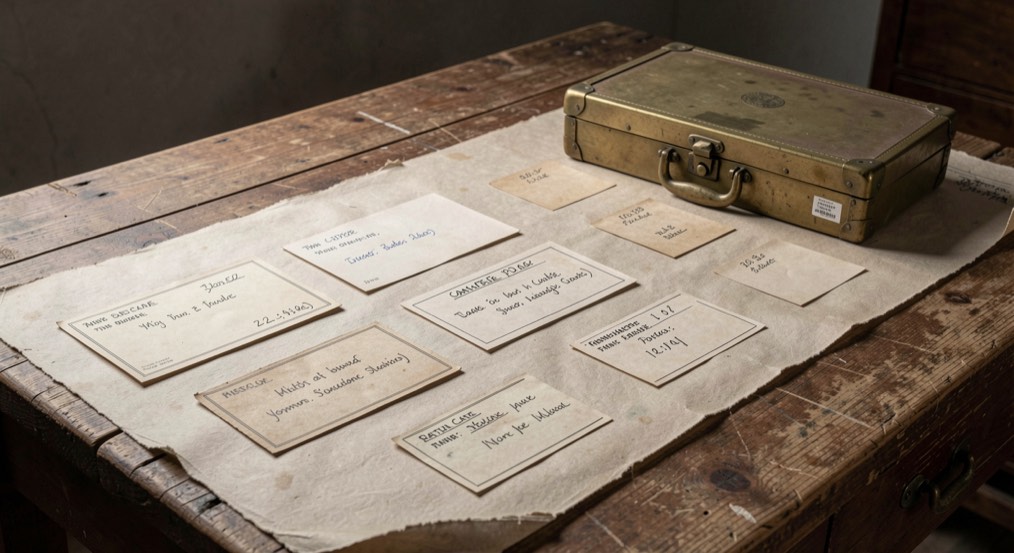
A personal poetry project can carry historical material that a longer prose account often flattens. Civil War Haiku is a collection in English that treats the American Civil War in short poems, grouping them by ground rather than by date and pairing the verse with notes on form, counting, and sources. It is built for readers of brief poetry as much as for teachers and students of American history.
What does a haiku sequence add to a history topic?
A sequence of short poems does not replace narrative history. It slows the reading down. Where a chapter might summarize a battle in a paragraph, a haiku holds one image and stops, leaving the reader to supply the scale. That restraint suits a war whose meaning is still argued over.
The collection at Civil War Haiku takes this approach across three broad areas. The first is terrain: twenty general poems, seven for Antietam on 17 September 1862, eight for the three days at Gettysburg, and seven for the winter slope at Fredericksburg. The second is daily life and mourning: eight poems on camp and waiting, eight on loss and how the country counted its dead. The third is form and transmission: an explanation of counting, the season word, and the cut, a comparison of six short forms, a lesson with instructions and a rubric for students, a glossary, and sources.
Grouping by ground rather than by date is a deliberate choice. It puts the reader at a place before it puts them at a moment. Antietam, Gettysburg, and Fredericksburg each carry their own weather, their own slope or field, and the poems work from that footing outward.
How does the collection organize the war?
The structure is spatial and seasonal. Twenty general poems set the frame. The named sections then narrow to particular ground: the cornfield and the sunken road at Antietam, the three days at Gettysburg, the winter slope at Fredericksburg. A reader moving through the sequence encounters the war as a set of places that were occupied, fought over, and left.
This is not the only way to arrange such material. A chronological arrangement would follow the war's own calendar, which has the advantage of clarity and the disadvantage of turning every poem into a date marker. A thematic arrangement by branch of service or by rank would separate soldiers from the people who waited for them. The ground-based arrangement keeps soldiers, civilians, and terrain in the same frame, because a field is where all three meet.
The daily life sections do similar work. Camp and waiting is its own subject, not a prelude to combat. Loss and counting is its own subject too, and the phrase matters: the country counted its dead, and the counting itself became a historical act, with lists, registers, and later reckonings. A short poem can hold the gap between a name on a list and a person.
What forms does the project compare?
The collection includes a comparison of six short forms. This is a practical section rather than a theoretical one. It sets the haiku beside other brief forms and asks what each one can carry: how many syllables or beats, whether a season word is required, whether a turn or cut is expected, and how much context the form assumes the reader already has.
The explanation of counting, the season word, and the cut belongs to the same effort. Counting is the most visible rule and the least interesting on its own. The season word does more work: it locates a poem in a time of year and, in a war context, in a season of campaigning or of waiting. The cut is the pivot, the point where the poem turns from one image to another and the reader feels the distance between them.
For a writer working on a personal project, this section functions as a set of decisions rather than a set of rules. Which form fits a given image? Does the image need a season word, or does the season word overdetermine it? Where does the cut fall, and what does it leave out? The comparison gives a vocabulary for answering those questions.
Can a short-form collection be used in a classroom?
Yes, and the collection anticipates it. A lesson with instructions and a rubric for students is included, along with a glossary and a list of sources. The lesson is aimed at students of American history as well as readers of brief poetry, which means it can sit in either a history unit or a writing unit.
The rubric matters more than it might appear. Short poems are difficult to assess, because a reader's first response is often a feeling rather than a judgment. A rubric gives the teacher something to point at: whether the season word is doing work, whether the cut is placed deliberately, whether the poem relies on a stock image or a specific one. The glossary supports the same goal by defining terms that a student may meet for the first time, and the sources give the historical claims a place to stand.
A teacher using the sequence does not need to assign the whole collection. A single section, such as the seven poems for Antietam, can be read alongside a prose account of the battle. The poems then serve as a second pass, one that asks students to notice what the prose left out: the sound of a field, the wait before an order, the way a place is remembered afterward.
Why group poems by ground instead of by date?
Because ground is what a reader can verify. A date is an abstraction until it is attached to a place, and a place is what a poem can render in a few lines. The cornfield at Antietam, the slope at Fredericksburg, the three days at Gettysburg: each is a real location with a real light and a real season, and each has been photographed, mapped, and preserved.
This also keeps the collection from becoming a timeline with line breaks. A timeline tells the reader what happened next. A ground-based sequence tells the reader what it was like to stand somewhere, which is a different kind of knowledge and one that short forms are suited to carry.
The approach has limits. A reader who wants the order of events will not find it here, and a reader who wants a single authoritative interpretation will not find that either. What the collection offers instead is a set of small, located observations, arranged so that the reader can move between them and build a picture.
What a personal project can do that a survey cannot
A survey has to cover ground. A personal project can stay in one place. That is the advantage of a collection like this one: it can spend eight poems on three days at Gettysburg and seven on a winter slope, because it is not trying to be complete. It is trying to be specific.
For readers of brief poetry, the interest is in watching a form tested against material that resists compression. For teachers and students of American history, the interest is in a second pass over familiar events, one that asks what a place looked like and what a person waiting there might have noticed. Both readings are supported by the same apparatus: the notes on form, the glossary, the sources, and the lesson.
The result is a small archive of attention. It does not settle the war's meaning, and it does not try to. It records what can be seen from a particular piece of ground, in a particular season, and leaves the rest to the reader.
Read next
A short form carrying a long record sits beside a practice kept in a fixed order, and a seasonal cycle of films follows. a Sunday service sets it out, and a season of film noir takes the same rule further.