Records & Releases
The material making of paper: from forest to printed page
The material trail behind every paper source: forest to paper mill to print production, and how reading habits evolved in a country built on the forest industry.
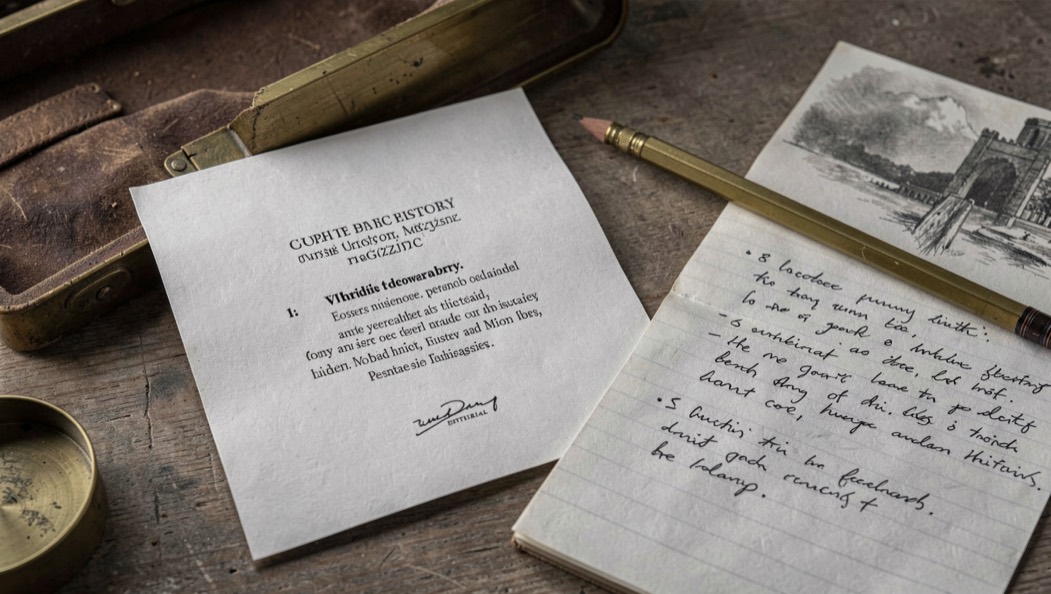
Every source this ledger cites began as a manufactured object: a tree felled, pulped, pressed into paper, printed, bound and distributed before a reader ever saw it. This page follows that material trail — from forest to paper to printed production to the reading habits it created — in the country where the trail is most visible: Finland, a national economy built substantially on the forest industry.
The subject has its own dedicated magazine: a Finnish journal on print culture reads the same trail from the other end, following newspapers, magazines, books and sheet music as the printed forms a forest industry made ordinary. Between the forest and the reader sits a chain of transformations that a documentary desk does well to remember, because each transformation decided what could be recorded and what could survive.
From forest to reel
Paper begins as fibre decisions: which species, which process, which balance of mechanical and chemical pulp. The choices are industrial but their consequences are documentary — a groundwood sheet yellows on a different schedule than a rag or chemical-pulp sheet, which is part of why two copies of the same catalogue can survive in different states of legibility. The mill’s product arrives at the printer as reels or sheets whose weight, coating and grain already constrain what the printed page can be.
Finland made this chain into national infrastructure: sawmills, paper mills, printing works and distribution networks carrying printed matter across a country where winter made other channels unreliable. The industrial side of that chain still exists — a Finnish forest-industry group is a present-day example of the producer scale involved — and its history explains why the country’s print culture became as dense as it did.
Print production and its objects
Once paper exists, print production sorts it into forms, and each form trains a different reading habit. The daily newspaper trains speed and routine; the weekly or specialist magazine trains the slow return to a subject; the book trains the long argument; the sheet-music pamphlet trains performance itself. A cataloguer reading an old run of any of them is reading the output of a production decision — format, frequency, print run — as much as the output of an editorial one.
Press criticism is itself a printed and posted object, and it leaves its own trail. One archive filed from Baltimore between 1995 and 2005 read the Sun, the City Paper and the Washington Post page by page, then turned the same habit on cable cuts and Federal Reserve coverage. The work survives as a record of how newsrooms decided what mattered, and of how those decisions were later checked. For anyone tracing a story back through its coverage, that kind of close reading of front pages, wire copy and corrections is the useful part.
This is why the ledger treats a source’s physical form as part of its identity. A label’s catalogue page printed for the trade answers different questions than the same information in a fan magazine or a mailing list, and the survival odds differ too: ephemera with a job to do — a catalogue, a price list, a programme — often outlives the more beautiful object it accompanied, because it was filed rather than displayed.
Reading habits evolve; the record stays
The move from print to screen changed the economics of everything on that chain except one thing: the documentary value of what was printed while print was the medium. An archive capture of a website can preserve its wording, but the paper catalogue it replaced had a fixity the web lacks — it was the same object in every reader’s hands, on a date anyone could agree on. The ledger’s habit of preferring a dated, checkable source is a habit print taught.
Print taught the habit of a dated, checkable source; the arithmetic of a golf scorecard teaches the same lesson about what a number is counting.
The same material awareness runs through the register’s newer pages. The working-resources note is about keeping notes that can be found twice, which is what a good index card always was. The engine-dossier page is about the printed manual’s authority over the remembered figure. The counted price survey is the printed price list rebuilt as a database. The safety-sheet page is about the document a workplace is required to keep printed within reach. And the scorecard page is about the smallest printed dossier of all, folded into a back pocket.
Why the substrate matters to a music ledger
A discography is a pile of paper before it is a list of facts: catalogues, liners, reviews, invoices, sleeves. Knowing that the pile was manufactured is not nostalgia; it is method. Paper could be lost, pulped, water-damaged or simply never reprinted, and the desk’s preference for the archive capture and the artist-controlled page is a preference for sources that have survived the substrate’s hazards. The reader who wants the applied version of that caution can see it in the verification guide and in the Session Ledger, where every record still shows the trail it travelled.
The specialist press kept every hobby visible
Print’s quiet achievement was that it made a publication economic for almost any subject. Finland’s specialist titles — for anglers, railway enthusiasts, homekeepers, record collectors — are the print-era version of what a small website does today, and they are what a discography like this one descends from. A Beezwax catalogue existed because print made small-audience publishing viable; the ledger that now records it exists because the same logic moved to a cheaper substrate. The format changed; the economics of attention did not.
What survives, and why
The material trail explains the archive’s gaps better than any theory of importance. Runs of specialist magazines survived because libraries bound them; mail-order catalogues survived because someone filed them; sleeves and labels survived attached to the object they described. What did not survive is mostly what was never meant to — the working document, the internal list, the price sheet — which is exactly the stratum a discographer needs most. The lesson the forest-to-page trail teaches this desk is humility about coverage: the record that remains is the record that was built to last or lucky enough to be kept, and the ledger’s job is to make that surviving trail legible rather than to pretend the pile was ever complete.
None of this argues that paper was better; it argues that paper was made, and that what was made can be traced. The trail runs from the managed forest to the mill, from the mill to the press, from the press to the shop and the shelf and the box in an attic — and a discography is a walk back along it. Each artefact in the catalogue is a station on that route, and the record that follows the artefact home is, in the end, a map of the whole material trail.
The trail that runs from forest to printed page also runs through the desk's own working file, and the note on research resources sets out how a first note becomes a version that can be cited.
Four of the desk's newer notes were written from documents rather than from sessions, and they follow the trail set out on this page: the funding file behind a small label, a hymnal read as evidence, the paper trail of a public poster campaign and the October shelf in the ledger all begin with a dated object.
Read next
Paper carries a document once, and three notes follow printed or built material through to its use: the cartouche on the panel that names a sheet, country wines and ciders on a method recorded step by step, and a day in the Panier on reading a built place in the order it presents itself.